At Integrated Behavioral Technologies, we believe in providing ongoing support beyond direct services. Here, you’ll find helpful tools, educational video guides, and information to empower individuals, families, and professionals in understanding and applying effective behavioral strategies.
Educational Video Library
Supported by the PDG Quality Subgrant, our Parent Cafe series offers comprehensive video guides on positive behavior support and mental well-being.
Parent Cafe 1: The Power of Reinforcement
Understanding and applying positive reinforcement to support child development, facilitate learning, and shape healthy behaviors.
Parent Cafe 2: Establishing and Maintaining Routine
Practical frameworks for constructing consistent daily routines at home and school to foster structural behavior management.
Parent Cafe 3: Increasing Social/Emotional & Academic Success
Actionable behavioral tools designed to elevate children's emotional resilience and school success parameters.
Parent Cafe 4: Community Readiness & Adaptation
Supporting children in adapting to external community settings and navigating changing schedules safely and positively.
Parent Cafe 1: Triple Vulnerability Model
A deep, clinical walkthrough of how biological, generalized psychological, and specific psychological vulnerabilities trigger anxiety and depression.
Parent Cafe 2: Developmental Stages for Growth
Identifying core social-emotional developmental milestones and learning strategies to support standard progress parameters.
Parent Cafe 3: Teaching Emotions to Young Children
Practical frameworks, educational materials, and daily routines to help young children recognize and name their feelings.
Parent Cafe 4: Boundaries, Relations, & Consent
Age-appropriate methods for teaching children boundaries, personal safety parameters, and relational validation.
Parent Cafe 5: Suicide Risk & Protective Frameworks
Critical suicide prevention resources, identifying mental health warning signs, and constructing supportive home environments.
Parent Cafe 6: Youth Transition & Social Health (Part 1)
Focusing on supporting social and emotional health as teenagers prepare to transition to early adulthood frameworks.
Parent Cafe 6: Youth Transition & Social Health (Part 2)
Advanced clinical approaches to navigate routine shifts, vocational preparations, and early adult transitions.
Parent Cafe 7: Pre-Employment Transition Services
Constructing job exploration frameworks, workplace readiness, and vocational competencies for transition-age youth.
Parent Cafe 1: Navigating School to Adulthood (Audio)
Critical diagnostic parameters and family coordination keys needed to transition from the school structure to adulthood systems.
Parent Cafe 2: Ins & Outs of Assessments
Understanding exactly what to look for, expect, and coordinate during clinical diagnostics and developmental assessments.
Parent Cafe 3: Validation & Recovering (Part 1)
Exploring validation as a powerful behavioral strategy to support young emotional regulation and healthy connections.
Parent Cafe 4: Validation & Recovering (Part 2)
Deepening validation practices and healing relationship coordinates following periods of emotional invalidation.
Parent Cafe 5: Why Kids Do What They Do
Analyzing behavior motives and learning scientific strategies on how to systematically increase appropriate skills in children.
Autism Hope for Families (AHFF)
Autism Hope for Families (AHFF) was established in 2012 by parents in Southeast Kansas seeking community, resources, and support. In 2023, AHFF officially merged with Integrated Behavioral Technologies (IBT) to form a unified network of care.
Under IBT, the AHFF program continues its vital mission of helping families navigate the complexities of autism by offering financial assistance, support networks, and community advocacy.
- Support Groups: Regularly scheduled meetings for parents and siblings to share experiences, guidance, and community.
- Communication Device Grants: Funding and coordination to supply children with non-verbal autism with speech-generating iPads and adaptive communication applications.
- Diagnostic Scholarships: Grants that help cover the out-of-pocket costs of medical and psychological evaluations for families in rural Kansas.
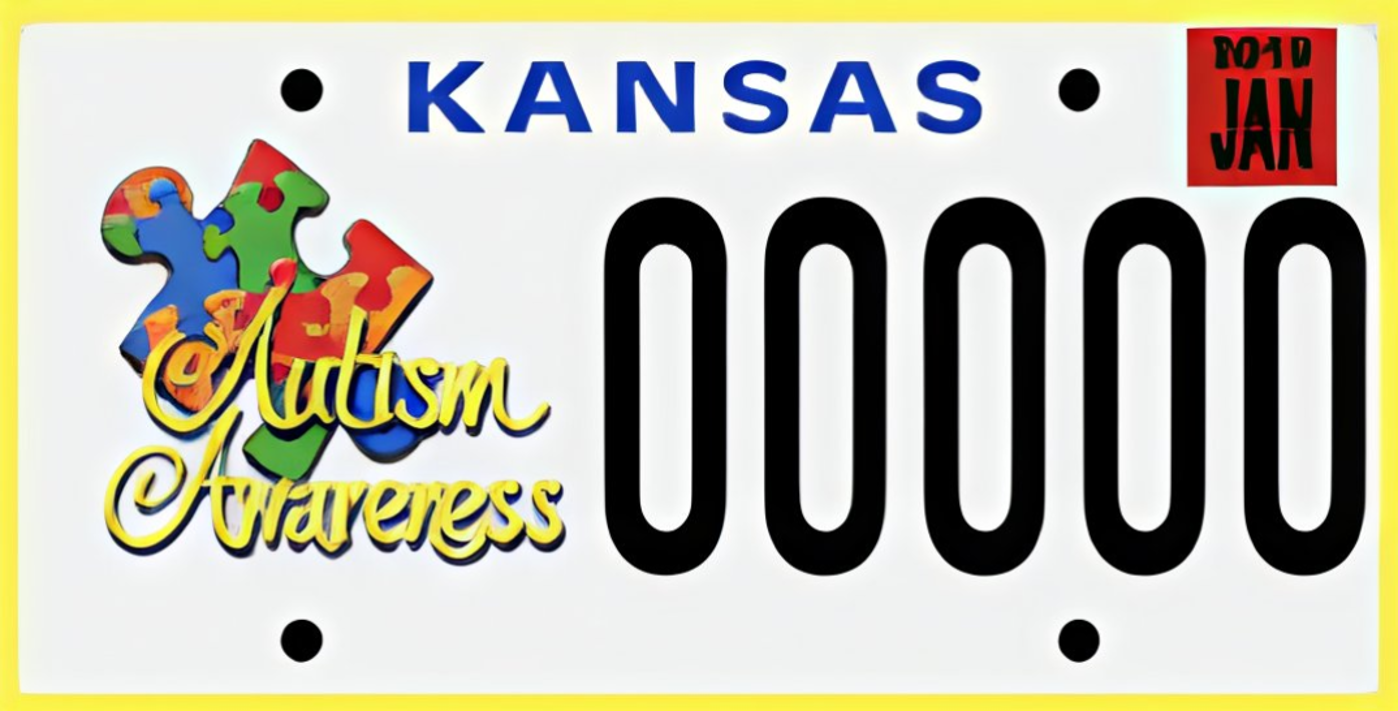
Kansas Autism Awareness License Plate
Show your support on the road! By ordering an official Autism Awareness license plate, you help fund academic scholarships and speech device grants for families across Kansas.
Questions? Email AHFF@ibt-inc.org
Parent Empowerment Peer (PEP)
The Parent Empowerment Peer (PEP)—also known as a Peer Support Specialist (PSS)—is central to implementing the Kansas Parent Support Network (KPSN) by serving as a mentor and advocate for families involved in the Kansas Child and Family Well-Being system. Navigating meetings, appointments, and court hearings when a child has been removed from the home is challenging and often overwhelming for parents and caregivers.
Drawing on personal lived experience—including at least six months of successful reintegration experience—PEPs provide a non-judgmental environment, shared understanding, systems navigation, psychoeducational group facilitation, and direct advocacy across all eight DCF catchment areas in Kansas.
- Peer-to-Peer Mentorship: Mentors are parents or legal caregivers who have personally navigated the foster care system and successfully reintegrated their children for at least six months.
- Elevating the Family Voice: Ensures parents and caregivers have meaningful representation and a voice in court hearings, family team meetings, case planning sessions, and council or committee meetings.
- Statewide Reintegration Support: Strengthens family functioning, improves reunification outcomes, reduces re-entry rates, and promotes child safety, permanency, and well-being across all 8 DCF regions.
Get Started with PEP
Connecting parents and caregivers with trained peer mentors who have lived experience—offering individualized court and case advocacy, monthly psychoeducational support groups, and community resource connections.
Core PEP Services & Statewide Outreach
Empowering families toward successful reintegration through trauma-informed peer support groups, direct systems advocacy, workshops, and resource linkages across Kansas.
Psychoeducational Support Groups
Monthly support groups in each DCF catchment area incorporating a trauma-informed, strengths-based curriculum informed by parent and professional listening sessions and facilitated using the Strengths-Based Case Management (SBCM) model.
Direct Parent & Caregiver Advocacy
Individualized one-on-one support accompanying parents to court hearings, family team meetings, and case planning sessions with DCF workers and case managers to ensure the family’s voice is represented in every system interaction.
Parent & Provider Training
In-person and virtual educational workshops across all 8 DCF regions—delivered in partnership with the Children’s Alliance, Child Welfare Case Management Providers (CWCMPs), and regional organizations.
Resource Development & Linkages
Educational guides on the Child in Need of Care (CINC) process, fatherhood involvement, foster placements, and mental health services, plus direct linkages to community resources for clothing, equipment, and reintegration supplies.
Peer Mentorship & Strengths-Based Framework
Built on state-recognized best practices, multi-agency collaboration, and the Strengths-Based Case Management (SBCM) model.
Peer Mentor Recruitment & Training Model
Partnering organizations identify, vet, and train a statewide pool of parent mentors (minimum two per DCF region) to provide direct peer-to-peer mentorship to families entering the Child and Family Well-Being system.
Vetted Lived Experience: Parent mentors must have at least six months of successful reintegration experience and receive ongoing coaching, supervision, and support.
Train-the-Trainer & Statewide Partners: Uses a train-the-trainer model with live coaching and feedback, partnering with Families Together, KCART, KIPHIC, and the KU School of Social Work for content creation and distribution.
Benefits of Peer Networks: Creates a non-judgmental environment centered on shared experiences, community building, improved coping skills, and peer connections that extend beyond formal group sessions.
Strengths-Based Case Management & Delivery
Group supervision and family support are grounded in the Strengths-Based Case Management (SBCM) model—exploring caregiver challenges through a solution-focused lens so family deficits never become the focus.
Informed by Listening Sessions: Curriculum and outreach are shaped by statewide in-person and virtual listening sessions with parents, youth with lived experience, judicial representatives, and child welfare professionals.
Dedicated Weekly Engagement: Full-time PEPs allocate their week across Direct Family Engagement & Advocacy (30%), Support Group Facilitation (20%), Outreach & Mentor Recruitment (15%), Training (12.5%), Documentation & Evaluation (12.5%), and Supervision (10%).
Family-Centered Flexibility: Evening hours and regional travel across DCF catchment areas are built in to accommodate family schedules for support groups, court hearings, and case team meetings.
Psychoeducational Topic Domains
Co-developed by parents with lived experience, social work researchers, and child welfare professionals to guide families through every stage of reintegration and beyond.
1. Navigating the Child Welfare System & Asking for Support
Orientation to the Child in Need of Care (CINC) process, understanding the role of Child Welfare Case Management Providers (CWCMPs), and building an effective family support network.
2. Lawyers, Judges, and the Court System: Navigating Your Court Case
Practical preparation and peer guidance for court hearings, working effectively with legal representation, and ensuring the parent’s voice is heard in judicial proceedings.
3. Developmental Stages of Children – Connecting with Your Child
Understanding the importance of developmental milestones, fostering healthy attachment and bonding across foster care placements, and maintaining child safety.
4. How Your Experiences Impact Your Parenting
Exploring Adverse Childhood Experiences (ACEs), trauma and complex trauma, and developing healthy, resilient coping mechanisms for parents and caregivers.
5. Communicating with Your Child & Others
Practicing age-appropriate communication with children alongside constructive, collaborative communication with foster families, case workers, and treatment teams.
6. The Good & The Bad: Rewards & Discipline
Using positive, age-appropriate rewards and reinforcement strategies paired with consistent limit setting and healthy boundary setting in the home.
7. My Mental Health, Substance Use & Behavior Change
Addressing caregiver mental health, understanding how substance use impacts parenting, and building sustainable habits that support long-term family recovery and stability.
8. Solving Problems, Life After Child Welfare & Community Resources
Developing everyday problem-solving skills, preparing for life after child welfare involvement (What’s Next?), and connecting with local community resources across all 8 DCF regions (Where Can I Go?).
School & Group Training
Our custom workshops cover critical educational settings, including:
- Identifying and referring families for developmental concerns in the classroom.
- Successfully including children with ASD in school and community environments.
- And much more!
Many of IBT's workshops satisfy the requirements for Type 2 Continuing Education credits for certified practitioners (BCBAs/BCaBAs).
Workshops & Type 2 CE Credits
IBT is dedicated to expanding the knowledge and skills of caregivers, educators, and clinical professionals. We offer interactive workshops and targeted training sessions in key behavioral and developmental areas to build stronger networks of support in classrooms and communities.
We offer comprehensive training in several core areas:
- Positive Behavior Support (PBS): Proactive, evidence-based strategies to improve quality of life and decrease challenging behaviors.
- Behavioral Assessment & Treatment Planning: In-depth instruction on evaluating behaviors and constructing effective behavior plans.
- Evidence-Based Interventions: Applied techniques designed to foster independence and learning for individuals with developmental disabilities.
The Supervision Platform That Works For You—Anytime, Anywhere
Whether you’re a supervisor providing feedback to supervisees and keeping track of fieldwork hours, or an organization supporting multiple supervisees, we make the process easier, affordable, and compliant.

Who will benefit?
- 👨🏫 A Supervisor
Who wants to streamline managing supervisees - 🏢 An Employer
Looking to support multiple supervisees efficiently
Complete Supervision Platform
Provide your supervisees with a platform to receive feedback, log their hours, and message you—anywhere, anytime.
Video Upload & Review
Provide time-stamped feedback on supervisees’ video uploads at your convenience.
Time Tracker
Log hours effortlessly and keep track of supervised and independent fieldwork.
Messaging System
Keep communication organized and easily accessible in one secure platform.
Compliance Management
Automated checks ensure your fieldwork hours meet BACB requirements.
Traditional vs. OASIS
The Old Way
- Accessibility: Limited by location
- Cost: High costs due to in-person meetings
- Feedback: Restricted by supervisor's schedule
- Tracking: Manual tracking, prone to errors
- Compliance: Manual, labor-intensive audits
The Better Way
- Accessibility: Available anywhere, anytime
- Cost: Affordable monthly and yearly plans
- Feedback: Asynchronous feedback available 24/7
- Tracking: Automated tracking with visual progress
- Compliance: Built-in checks and automated reports
Core Employee Benefits
We believe in supporting and empowering our clinical and administrative staff so they can deliver the highest level of care to our families.
Supervision & Licensure
We provide comprehensive, high-quality supervision hours at no cost for clinical certifications and licensures, including BCBA, BCaBA, and RBT credentials.
Continuing Education
Stay at the forefront of behavior analysis with continuous in-house training, collaborative clinical reviews, workshops, and professional development support.
Tuition Discounts
Through our academic partnership with Purdue University Global, IBT staff members are eligible for exclusive tuition discounts on relevant degree programs.
Loan Forgiveness (PSLF)
As a registered 501(c)(3) non-profit organization, your full-time employment at IBT qualifies you to participate in the federal Public Service Loan Forgiveness program.
Comprehensive Benefits
Full-time providers gain access to medical, dental, and vision insurance coverage options, alongside a 401(k) retirement savings plan with employer matches.
Professional Memberships
IBT supports your professional network by covering fees and memberships for state and national behavioral associations and research resources.
This is Not Your Ordinary, Run-of-the-Mill Job
Working at IBT means joining a mission-driven family dedicated to bringing elite autism care, diagnostic assessments, and early child intervention to rural and underserved Kansas communities. We hold our clinical outcomes to the highest standards because our kids deserve the best.
We are looking for passionate, growth-minded professionals who share our clinical values:
- Patience & Empathy: Maintaining a calm, supportive posture in highly intense therapeutic situations.
- Scientific Integrity: Using proven, data-driven ABA methodologies to guide clinical decision making.
- Collaborative Growth: An eagerness to learn from senior BCBAs and support technicians in the field.
- Community Pride: Proudly representing a 501(c)(3) non-profit that leaves no child behind.
Explore Active Opportunities
Browse open positions in Basehor, Pittsburg, Emporia, Park City, McLouth, Coffeyville, and surrounding Kansas areas.
Having trouble viewing the listings above? Access our career portal directly on Rippling.
Looking for Personalized Guidance?
If you need help identifying which assessments or behavioral services would best fit your child, family, or classroom, our board-certified clinical specialists are here to guide you.
Get In Touch With IBT